Wastewater and Drainage
Diagnosing wastewater pump blockage: examine the system before the impeller
Investigate repeated rag and fibre blockages with event records, sump observations and hydraulic measurements.
Illustrative engineering scenario · Assumptions are stated in the text.
AT A GLANCE
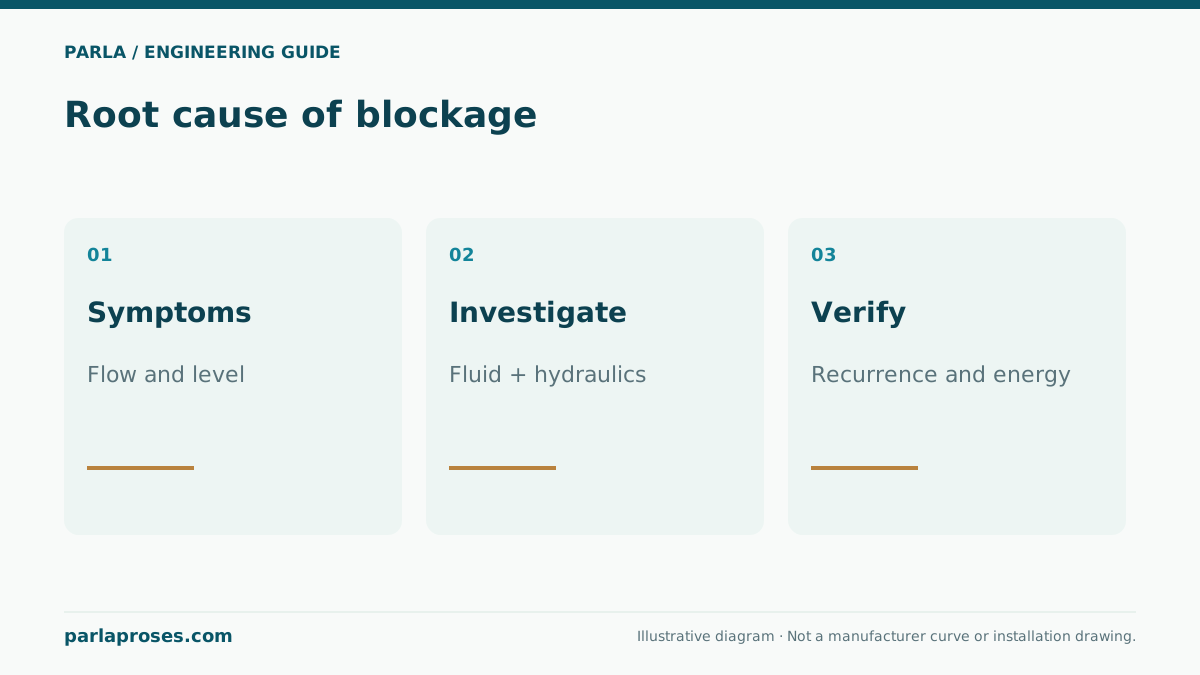
- Separate blockage location and material in the incident record.
- Measure the sump and discharge system alongside the pump.
- Evaluate corrective action with consistent event definitions and workload.
Do not confuse the symptom with the blockage location
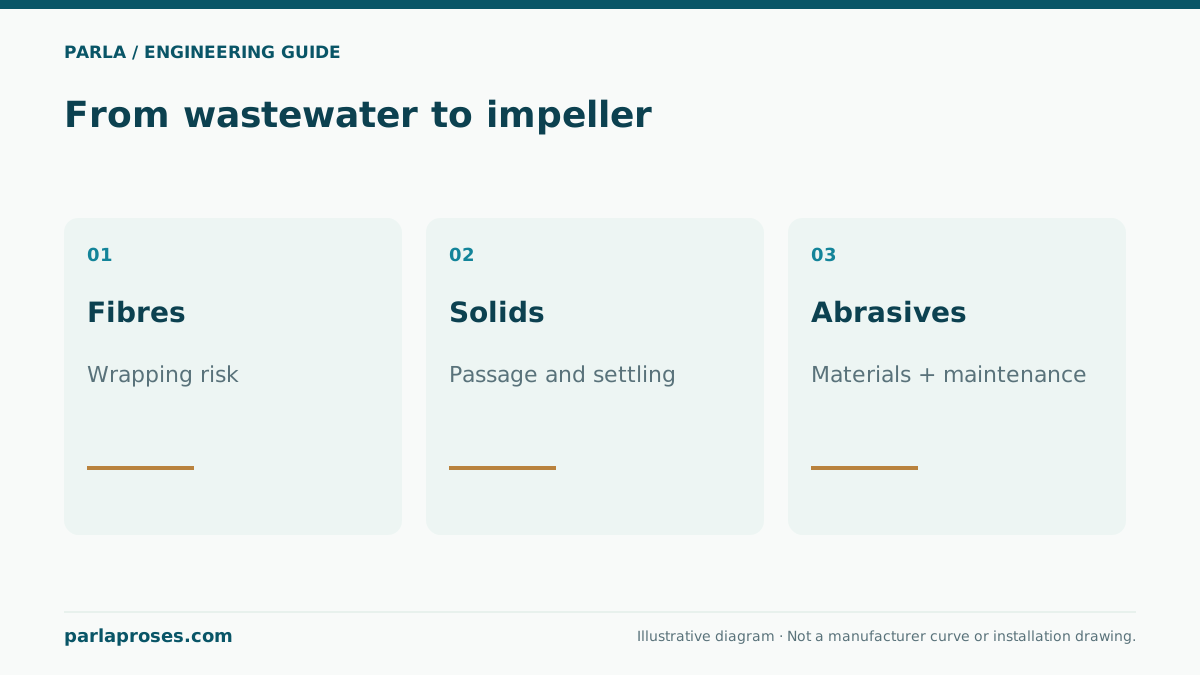
Reduced flow or repeated thermal trips alone do not prove the impeller is blocked. Rags at the sump inlet restrict suction; a stuck check valve can cause backflow or pressure anomalies; sediment in the discharge line can create excess losses. Record motor current, line pressure, sump level and runtime for the same incident. Apply electrical isolation, confined-space and lifting procedures before inspection or removal. Never reach into a running pump inlet. Photograph the material type and location before replacing parts. Include any surface vortex and the actual stop level in the same incident record to distinguish air ingestion from blockage.
Normalise an incident log
Suppose an illustrative log shows four interventions in 30 days and 240 pump running hours: 4 / 240 × 1,000 = 16.7 interventions per 1,000 running hours. In another month two interventions occur over only 80 hours, or 25 per 1,000 hours. Raw incidents fell, but frequency per runtime rose. Rainfall and incoming loading may differ between months. This is a tracking measure within one station, not an industry threshold or guarantee.
Code events separately as sump cleaning, check-valve fault or true impeller blockage. Combining all interventions hides the root cause.
| Period | Events / runtime | Interpretation |
|---|---|---|
| Month A | 4 / 240 h | 16.7 events / 1,000 h |
| Month B | 2 / 80 h | 25 events / 1,000 h |
| Data quality | Consistent event definition | Record different rainfall and loading |
Measure hydraulic causes separately
Revisit the pump and system curves at normal and peak inflows. A narrow pipe section, long line, valve, check valve, incorrect rotation and worn impeller can reduce flow. Whether low line velocity contributes to deposition depends on duty and fluid; there is no universal limit here. Do not diagnose by running against a closed valve. If the check valve leaks, the same water returns and increases cycles and fibre loading. A catalogue free-passage diameter does not fully describe fibrous material behaviour.
Tie impeller decisions to evidence
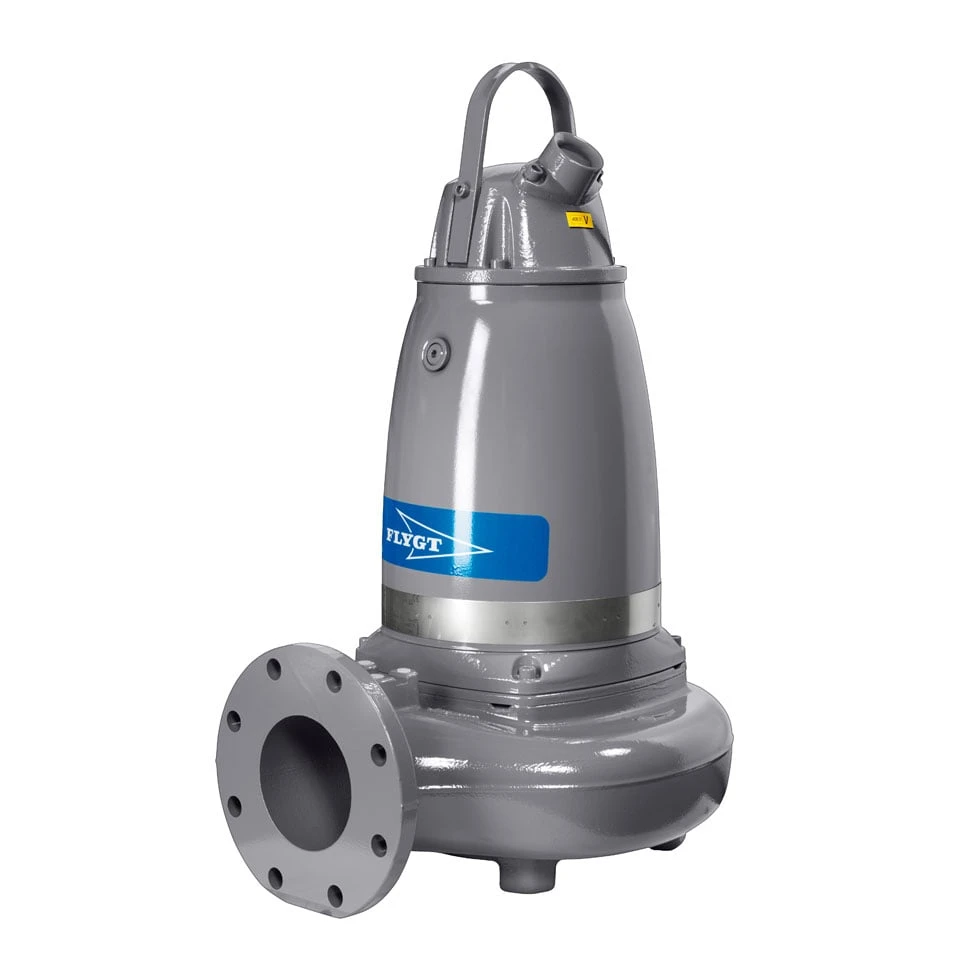
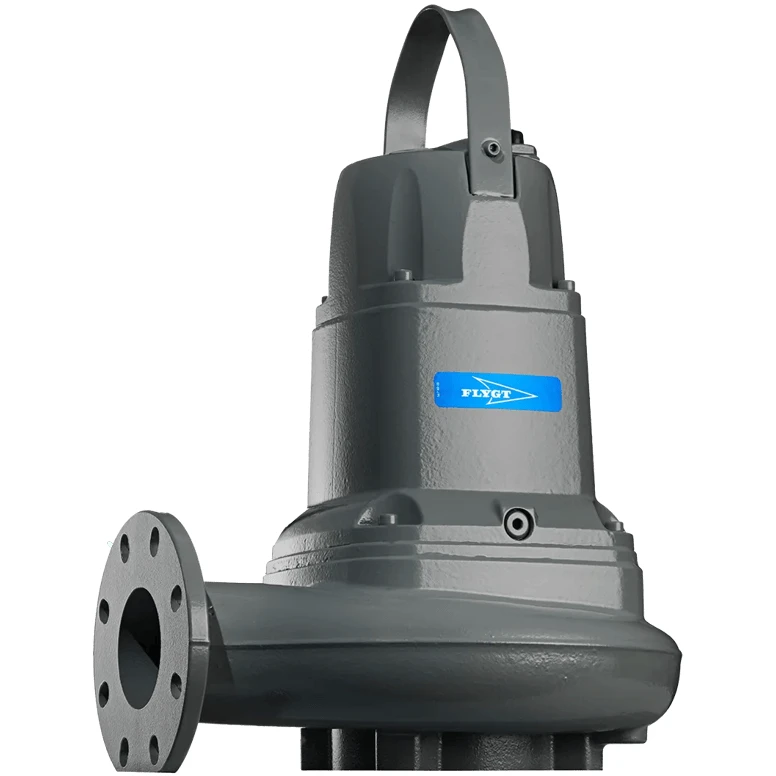
Self-cleaning approaches such as Flygt N Technology or cutting hydraulics such as chopper designs are considered according to the diagnosed cause. Do not assume every N-family variant has identical impeller, free passage and motor combinations. A cutter does not fix grease build-up in a pipe, a poor sump inlet or a closed valve. Select product and motor at actual flow and head, considering abrasives and maintenance. If suction entrains air or motor cooling level is wrong, a new impeller may not solve the problem.
Repeat the same measure after correction
Clean sump deposits safely, repair a defective check valve or incorrect level setting, and record baseline current and pressure. Over the chosen comparison period, keep the same event codes, runtime and inflow observations. A short zero-event period does not prove success, especially when rain and fibre load are low. Operator cleaning time, lifting cost and high-level alarms also belong in the decision. Do not claim new equipment will never block.
Frequently asked questions
Is every low-flow event an impeller blockage?+
No. Check the sump inlet, check valve, line losses, rotation and level-control cycle.
Does free-passage diameter predict rag blockages?+
No. Long fibres and rags behave differently from a single particle diameter; examine the selected hydraulics and sump conditions.
Will an N-series or chopper prevent every blockage?+
No. Product variant and application limit matter, but pipework, valves, inlet layout and maintenance can also cause blockage.
Why divide interventions by 1,000 running hours?+
To compare different operating durations. It still needs rainfall and incoming loading context.
Apply this assessment to your project.
Share your operating conditions, existing equipment and objective. Let’s assess product selection together with the technical documents.