Materials and applications
How to assess pump materials against the liquid
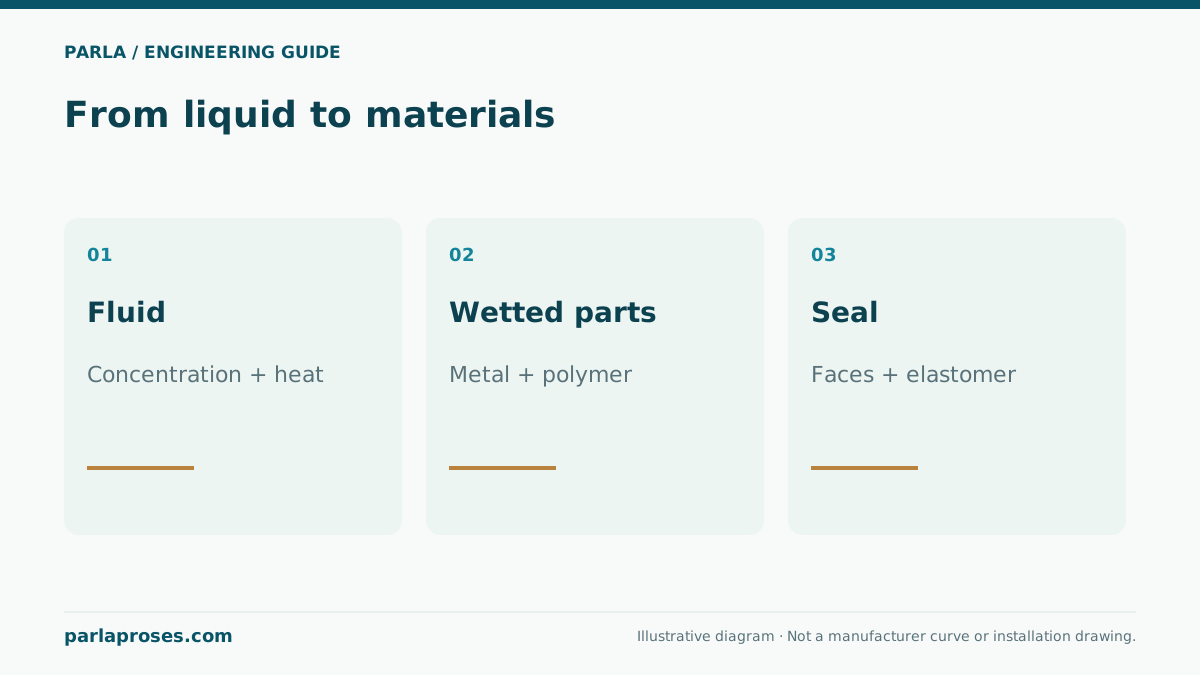
A stainless-steel label is not enough. Prepare one liquid specification for casing, impeller, elastomers and shaft seal.
Illustrative engineering scenario · Assumptions are stated in the text.
AT A GLANCE
- Record normal and extreme liquid conditions, samples, temperature, concentration and solids.
- Verify impeller, shaft, elastomers and seal together with the casing.
- Revalidate materials against a new revision if the process changes.
Describe more than the liquid’s name
A pump described as suitable for water is not automatically suitable for every process water. Feedwater, a hot cleaning solution and saline drainage at the same plant differ in pH, chloride, temperature and abrasive solids. Record mixture concentrations, cleaning cycles, normal and worst-case temperatures, entrained gas and expected sediment. A casing-only material check misses the impeller, shaft, O-rings and mechanical seal wetted by the liquid.
The goal is not to generalise a material name but to verify the complete wetted-parts list against the exact service with the manufacturer. Compatibility charts are an initial screen; velocity, temperature, concentration, deposits, crevices and galvanic couples affect real life. Record contact approvals for potable water and cleaning and rinsing phases for an industrial process separately.
Example: two duties need not share a pump
Consider an illustrative plant: line A carries clean, low-chloride water at 20 °C and 8 m³/h. Line B returns wash water at 55 °C with seasonally varying chloride and small abrasive particles. Equal design flow does not justify identical material selection. Manufacturer-approved standard materials may be considered for A. For B, measure pH, chloride and solids in a sample; independently check corrosion and abrasion at temperature, elastomer limits and seal faces. This example does not declare any particular alloy suitable for B.
On the enquiry form, replace “55 °C, contains chloride” with normal and maximum concentration and the sample date. Describe separately any stronger solution seen during cleaning and its duration. Giving the manufacturer the principal liquid, occasional condition and cycle duration permits a meaningful material and seal choice.
| Check | Line A | Line B | Decision impact |
|---|---|---|---|
| Temperature | 20 °C | 55 °C | Recheck elastomer and corrosion limits |
| Chloride | Low; measure | Variable; measure maximum | Assess localised corrosion from sample |
| Solids | Absent | Small abrasive load | Review impeller, wear parts and seal |
| Cleaning cycle | Not specified | Stronger solution possible | Record duration and concentration separately |
Distinguish abrasion from corrosion
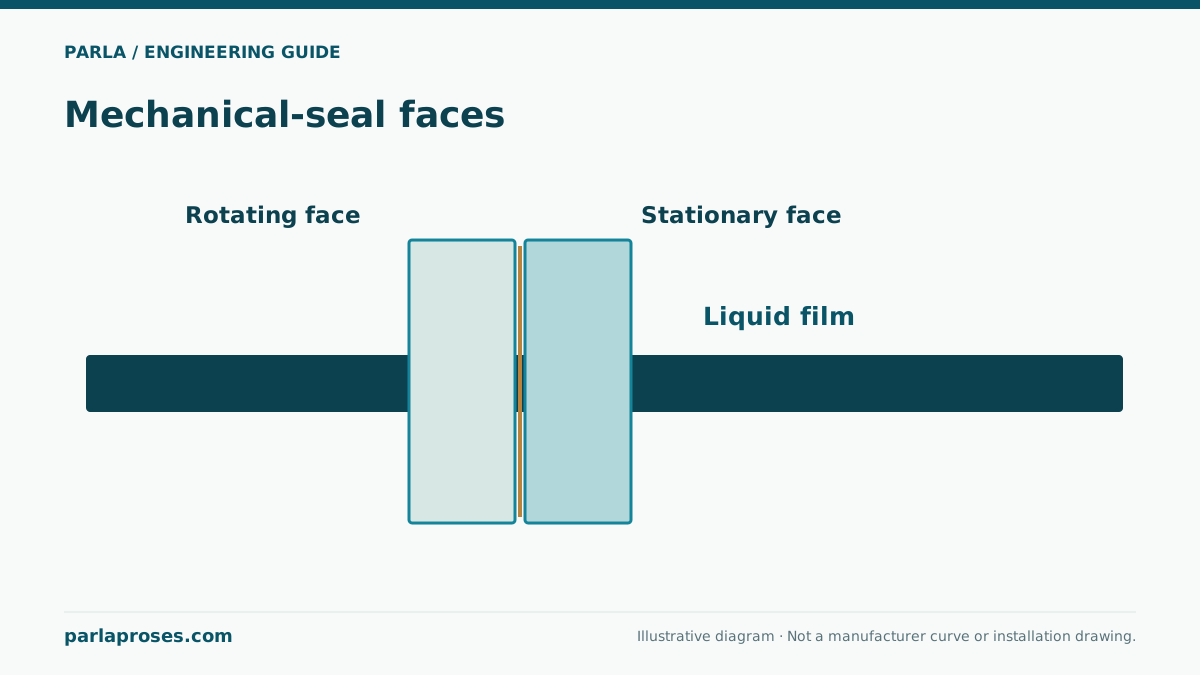
Chloride, extreme pH and temperature influence chemical attack; sand and hard particles can mechanically wear the impeller, casing and seal faces. Stainless steel does not automatically resist particle abrasion. Add particle size, hardness or type, solids fraction and settling behaviour to the liquid analysis. Consider deposits left during stops, intermittent operation and air exposure in saline service. Inspect joints with dissimilar metals for galvanic conditions.
Separate worn seal faces from corroded metal in leakage records. Replacing only the impeller with a harder material can leave an incompatible elastomer or connector as the weak link. Fibre loading and clogging in wastewater, hygiene in clean water and containment in chemical duties are distinct decision headings in the same selection record.
Document approval and manage changes
Share sample analysis, operating temperature range, maximum concentration and cleaning plan under one revision number. Record which duty and liquid condition the selected pump and its materials were approved for; reopen selection if the chemical or temperature changes. Monitor initial leakage, discolouration, wear and performance trends. Before work on a chemical or pressurised system, isolate and drain it with appropriate protective procedures.
An AISI 316 label in a catalogue does not establish that every casting, shaft and elastomer has the same composition. Conversely, choosing a more highly alloyed metal alone does not fix an incompatible seal. Use the full material schedule and manufacturer approval rather than a headline label; decide against the complete process and chemical-safety data.
Frequently asked questions
Is 316 stainless steel suitable for all saline water?+
No. Chloride concentration, temperature, stagnation, crevices and other constituents alter local corrosion risk. Supply the full analysis and duty to the manufacturer.
Is pH alone enough to select materials?+
No. Chloride, solids, temperature, cleaning cycles and elastomer compatibility also matter; equal pH in different solutions need not mean equal behaviour.
Can the existing pump continue after liquid chemistry changes?+
Reconfirm material and seal suitability for the new concentration and temperature range. An earlier approval does not automatically extend to new service.
Are abrasive solids and chemical corrosion the same issue?+
No. Particles mechanically abrade surfaces; chemical attack depends on material and medium. They can coexist and must be assessed separately.
Apply this assessment to your project.
Share your operating conditions, existing equipment and objective. Let’s assess product selection together with the technical documents.