Boosting and operation
Booster pressure vessels: nominal volume, drawdown and precharge
The litres on a vessel label are not its usable water volume. Calculate precharge, pressure range and pump cycling together.
Illustrative engineering scenario · Assumptions are stated in the text.
AT A GLANCE
- Do not confuse nominal vessel volume with drawdown; use absolute pressure in ideal-gas calculations.
- Assess start frequency together with demand, pump delivery and control logic.
- Verify precharge and actual acceptance volume against the selected vessel and controller documentation.
Define the vessel’s purpose first
A booster pressure vessel stores water by compressing a gas cushion. In a suitable design, a membrane or diaphragm separates water from gas. A vessel labelled 100 litres should not be expected to deliver 100 litres of water in normal service. Drawdown is the water available between pump cut-out and the next cut-in. Start by stating why this volume is needed: to meet small demands without running the pump, reduce unnecessary starts or help the control system operate steadily.
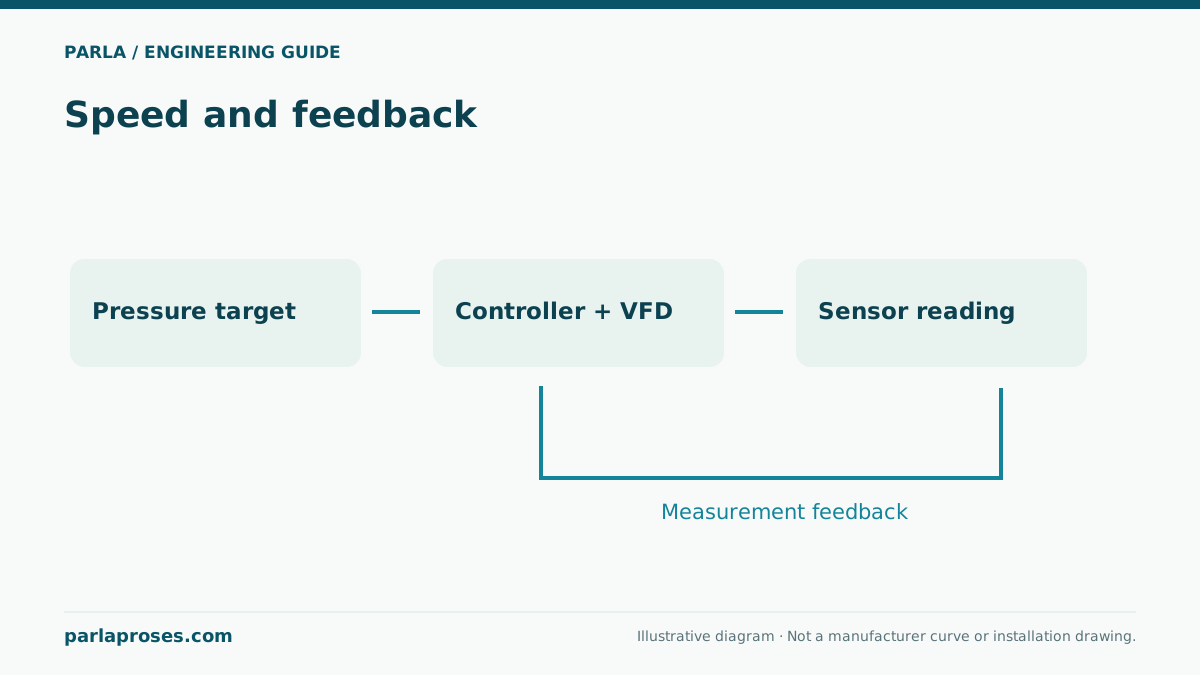
A fixed-speed booster controlled by a pressure switch does not automatically use the same vessel calculation as a variable-speed system. For the latter, sleep mode, restart logic, low-flow detection and the controller’s minimum vessel requirement matter. A larger vessel does not solve every control problem; leakage, poor pressure-sensor placement and incorrect settings require separate investigation. For potable water, include wetted-material suitability, vessel temperature and pressure ratings, and maintenance access in the selection record.
Calculating drawdown in a 100-litre vessel
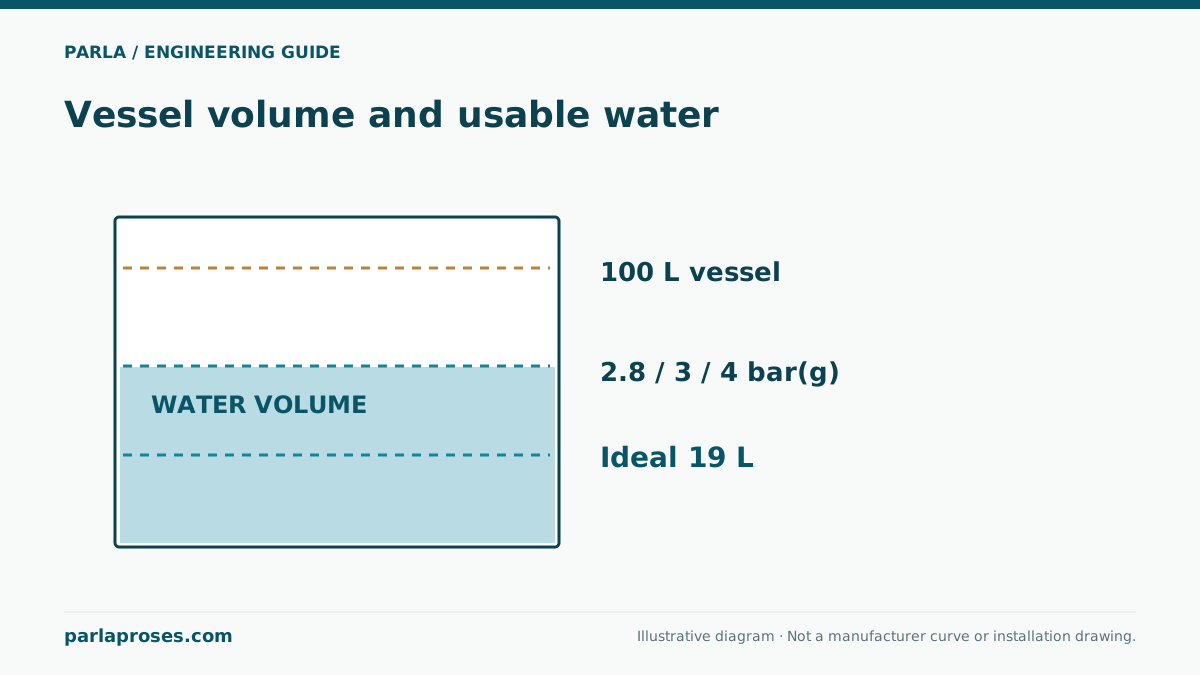
This is an illustrative calculation, not a setting instruction for any product. Assume a nominal gas volume of 100 litres with the water side empty, a precharge of 2.8 bar(g), pump cut-in at 3 bar(g) and cut-out at 4 bar(g). Taking atmospheric pressure as approximately 1 bar gives absolute pressures of 3.8, 4 and 5 bar(a). Using gauge pressure in the gas law changes the result and is incorrect.
For an ideal isothermal process, P × V remains constant. From the precharged condition, the gas volume at cut-in is 100 × 3.8 / 4 = 95 litres; at cut-out it is 100 × 3.8 / 5 = 76 litres. Water content therefore rises from 5 to 24 litres. Ideal drawdown between the two pressures is 24 − 5 = 19 litres. Actual membrane geometry, manufacturing tolerances, gas-temperature changes and usable-volume limits mean that the manufacturer’s acceptance-volume data should govern the final selection.
| Condition | Pressure | Gas / water volume | Interpretation |
|---|---|---|---|
| Precharge with water drained | 2.8 bar(g) = 3.8 bar(a) | 100 / 0 L | Reference state for the calculation |
| Pump cuts in | 3 bar(g) = 4 bar(a) | 95 / 5 L | The vessel is not completely empty |
| Pump cuts out | 4 bar(g) = 5 bar(a) | 76 / 24 L | Total stored water is 24 L |
| Usable difference | 4 → 3 bar(g) | 24 − 5 = 19 L | 19% of nominal volume |
Relate vessel volume to start frequency
For the same example, assume an approximate average pump delivery of 60 L/min across the pressure range and a steady demand of 30 L/min. With the pump off, the 19-litre drawdown lasts 19 / 30 = 0.633 minutes. With the pump on, the net flow into the vessel is 60 − 30 = 30 L/min, so refilling also takes approximately 0.633 minutes. The ideal cycle is therefore 1.267 minutes, or about 47.4 starts per hour. This is a calculation to compare against the selected motor and control system’s permitted limits, not a declaration that this starting rate is acceptable.
Under the simplified assumption that pump flow is independent of pressure, the shortest cycle occurs when demand equals half the pump flow. In practice, the pump curve, varying demand, multipump sequencing and control delays affect the result. Before increasing vessel size, assess the daily demand profile, brief draw-offs and measured start counts. Even a correctly sized vessel can trigger regular starts if there is a continuous small leak.
Verify operating settings with records
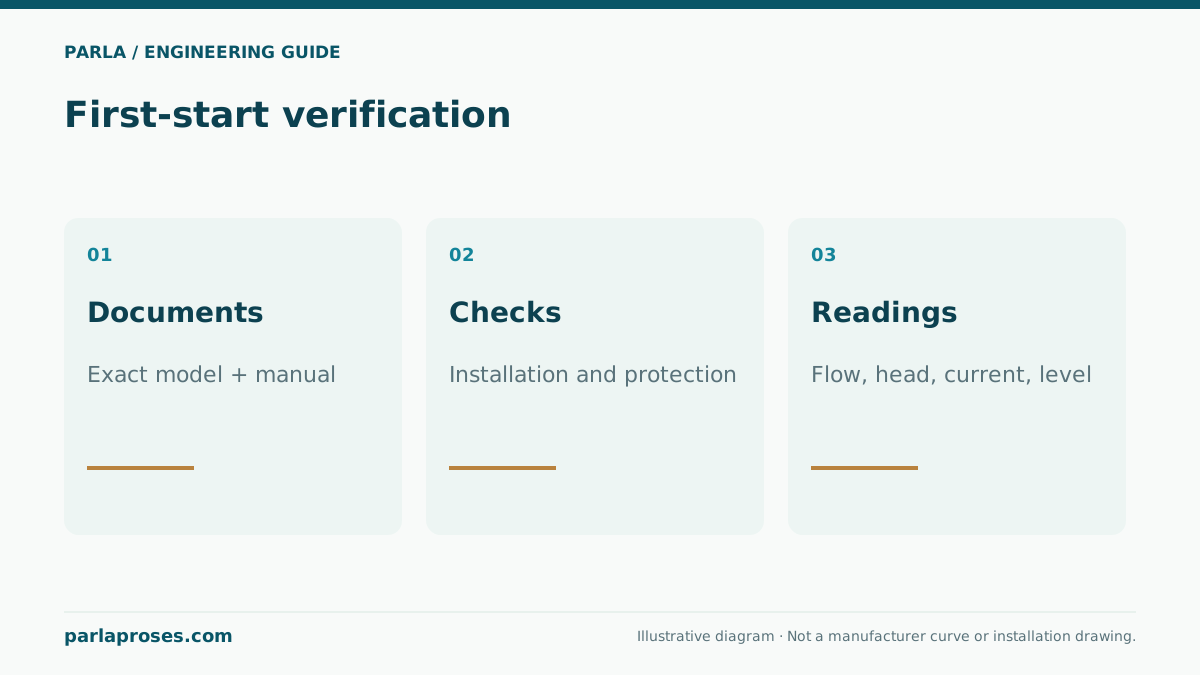
At commissioning, record the vessel nameplate, measured precharge, cut-in and cut-out pressures, connecting-valve positions and controller settings on one sheet. Check the required pressure at remote or elevated outlets separately from the vessel gauge: elevation and pipe losses reduce the pressure available at the point of use. Widening the pressure band can increase drawdown, but also changes the pressure range experienced by fixtures and the pump’s operating region.
The maintenance plan should include precharge checks using the manufacturer’s method, leakage inspection and comparison of start records. Adding gas alone is not a diagnosis when pressure fluctuates; assess the membrane, sensor, check valve and system demand together. A blocked connection or closed isolation valve can also make the vessel hydraulically ineffective. Inspection and intervention should follow suitable isolation and depressurisation by qualified personnel.
Frequently asked questions
Why does the 100-litre vessel provide only 19 litres?+
Much of the volume is occupied by compressed gas in this example. Drawdown is the change in stored water between 4 and 3 bar(g), not the total geometric volume. Different pressure settings give different results.
Should precharge always be set to 2.8 bar?+
No. It is only an assumption for the example. The real setting follows the vessel, pump controls and manufacturer’s instructions. A single rule does not automatically apply to both fixed-speed and variable-speed systems.
Is a vessel unnecessary with an inverter booster?+
That depends on the control system. The manufacturer may require vessel capacity for small demands, sleep and restart behaviour. Verify selection against the controller’s operating mode and documentation.
Does frequent starting always mean the vessel is too small?+
No. Leakage, loss of precharge, membrane damage, a closed connection valve or incorrect controls can produce the same symptom. First compare pressure and start records with actual demand.
Apply this assessment to your project.
Share your operating conditions, existing equipment and objective. Let’s assess product selection together with the technical documents.