
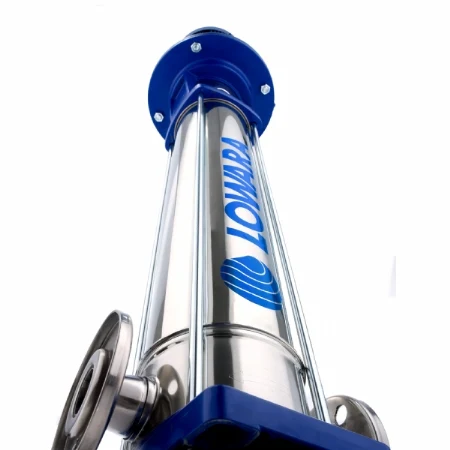
What is the main difference?
A single-stage pump transfers energy through one impeller. In a multistage pump, the liquid gains pressure across multiple impellers. End-suction describes inlet geometry, while multistage describes stage count; the terms are therefore not always exact opposites.
When are end-suction families considered?
They are a common solution for general water transfer, cooling circuits and industrial processes, with casing and impeller choices. Open-impeller or stainless versions may address particular liquid requirements. Suitability is determined by the duty curve and material compatibility.
The role of multistage design
Multistage designs are considered for higher-pressure boosting, feed and washing duties. A vertical arrangement limits floor space, while a horizontal layout may suit machine integration. For immersed designs, tank dimensions and liquid level become additional selection factors.
How should similar-looking products be compared?
Compare hydraulic efficiency, motor power, permitted pressure, service access and control options at the same duty point. Read the technical construction of compact twin-impeller models such as Lowara CA and Ebara 2CDX separately. A catalogue category cannot describe every design detail.